The future pharma workforce will not be defined by AI replacing people. It will be defined by how effectively life sciences organisations combine human expertise with machine intelligence.
For European people leaders in life sciences, this means a shift away from static jobs and traditional workforce planning towards skills, talent flow, AI capability and adaptive organisational design.
The Designing the AI-Enabled Life Sciences Workforce Europe captures this shift in its central positioning: we're focused on making the “human-first, machine-enhanced future pharma workforce” a reality by redefining skills, reshaping teams and rethinking enterprise-wide work to accelerate scientific progress and unlock smarter, faster drug development.
Why the Future Pharma Workforce Needs a New Skills Strategy
Generative AI is already changing what is possible across the life sciences value chain. Accenture reports that intelligent technologies could help reduce the time to bring a new medicine to market by 1 to 4 years, create $0.5 billion to $2 billion in revenue upside per new medicine, reduce costs per successful drug by 35% to 45%, and reduce corporate function costs by 30% if used at scale with appropriate workflow reinvention.
Those gains will not happen through technology deployment alone. They require people to build new capabilities, leaders to redesign work, and organisations to connect AI adoption with business value.
For HR leaders, this means shifting from job-based planning to skills-based workforce design. Rather than asking only how many people are needed in each function, life sciences organisations need to understand:
- Which skills are becoming more valuable?
- Which skills are declining in relevance?
- Which roles will be augmented by AI?
- Which teams need redeployment pathways?
- Which human capabilities become more important as automation increases?
- Which leadership behaviours are needed to build trust in AI-enabled work?
McKinsey’s life sciences research found that only 6% of surveyed respondents had conducted a skills-based talent assessment to determine how their talent strategy should evolve around generative AI priorities. That leaves a significant opening for CHROs and Heads of HR to lead the enterprise conversation.
From Workforce Planning to Talent Flow
One of the most important concepts for the future pharma workforce is talent flow.
Traditional workforce planning often assumes relatively fixed roles, functions and reporting lines. AI disrupts that model because work can increasingly be decomposed into tasks, capabilities and decision points. Some work may be automated, some augmented, some elevated, and some redistributed across functions.
We'll be covering how to move from traditional roles to new skills thinking, how to build future skills-based organisations, how to develop an industry-wide skills taxonomy, and how to rethink what work gets done by whom. These themes strongly align with what senior HR leaders are now being asked to solve inside large, complex pharma organisations.
Talent flow means enabling people to move more dynamically towards the work where they can create the most value. In a life sciences context, that could mean:
- Redeploying scientific talent into AI-enabled discovery workflows
- Building cross-functional capability between HR, digital, R&D and commercial teams
- Creating internal marketplaces for scarce skills
- Using people analytics to identify adjacent skills and reskilling opportunities
- Designing career pathways around capability growth rather than linear role progression
This is especially relevant in Europe, where demographic pressures and shortages in analytics, digital and advanced manufacturing talent are intensifying capability gaps across the sector.
Human-First AI: Why Trust Matters in European Life Sciences
The European context matters.
European life sciences organisations face more varied regulatory environments, stronger social partnership expectations and embedded country-specific labour models. This means AI workforce transformation cannot be implemented as a generic global playbook.
In practice, HR leaders need to build transformation strategies that address:
- Works council engagement
- Employee communication
- Responsible AI governance
- Transparency around role and task change
- Country-specific labour expectations
- Leadership alignment across markets
- Trust in data-driven workforce decisions
McKinsey highlights that successful AI scaling requires risk and compliance collaboration from the outset, particularly because generative AI introduces risks around hallucinations, accuracy, bias, intellectual property and data security. Deloitte also recommends creating governance structures that manage ethical use, risk, investment and progress while enabling innovation.
What CHROs Should Do Next
To prepare for the future pharma workforce, we should focus on five priorities:
1. Build an AI workforce readiness baseline
Assess where AI is already being used, which teams are experimenting, which skills are missing and where adoption is being blocked.
2. Create a future skills taxonomy
Map AI-adjacent skills across technical, functional and human capabilities, including critical thinking, judgement, change leadership, ethical decision-making and data literacy.
3. Redesign work at task level
Look beyond job titles. Identify which tasks should be automated, augmented, redesigned or protected as human-led.
4. Build leadership confidence
Equip senior leaders and people managers to have credible conversations about AI, productivity, workforce impact and employee trust.
5. Connect workforce transformation to measurable business value
Deloitte recommends aligning on a strategic blueprint, prioritising two to three enterprise opportunity areas and identifying “no-regret bets” to build momentum. HR should ensure those bets include workforce adoption, capability building and operating model change.
The New Mandate for Pharma HR
The future pharma workforce will not be created by AI tools alone. It will be designed by leaders who understand how to connect technology, talent, work and culture.
For us, the next stage is clear: build the skills, structures and trust required for human-first, machine-enhanced transformation.
Join senior HR, People and workforce transformation leaders at the Designing the AI-Enabled Life Sciences Workforce Europe to explore how leading life sciences organisations are redesigning skills, talent flow and operating models for the AI-enabled future. Download the agenda today.
Sources
- Accenture, Reinventing life sciences in the age of generative AI, August 30, 2024. Available at: https://www.accenture.com/gb-en/insights/life-sciences/reinventing-life-sciences-age-generative-ai
- McKinsey & Company, Scaling gen AI in the life sciences industry, January 10, 2025. Available at: https://www.mckinsey.com/industries/life-sciences/our-insights/scaling-gen-ai-in-the-life-sciences-industry
- Deloitte, Realizing the value of artificial intelligence in life sciences: Key steps to harness the promise of GenAI in pharma. Available at: https://www.deloitte.com/us/en/Industries/life-sciences-health-care/articles/value-of-genai-in-pharma.html
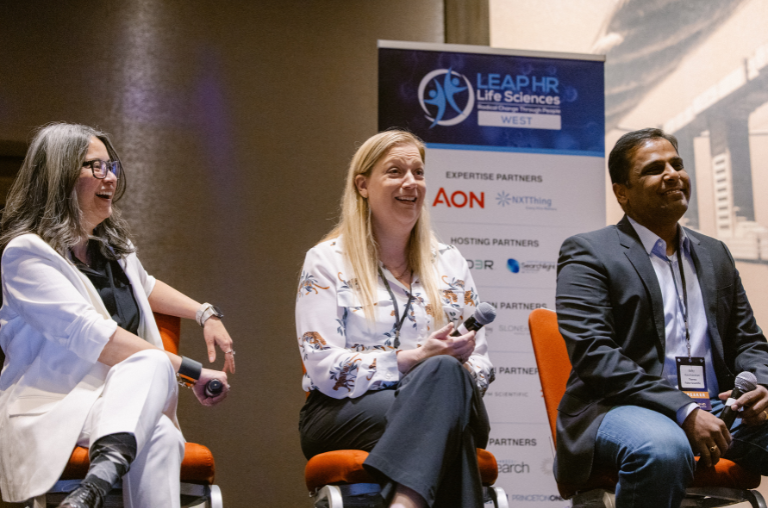
Connect with Europe’s Leading HR Innovators
Hear from senior HR leaders from across Europe who are actively shaping the AI-enabled workforce and redefining what success looks like in a new era of work.
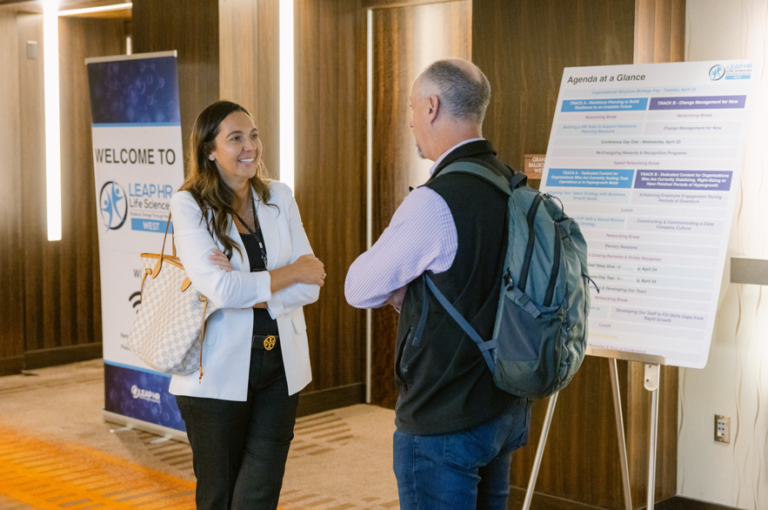
Position Your Solution at the Core of Transformation
Collaborate with forward-thinking organisations and showcase how your offering can drive meaningful change across the evolving European life sciences landscape.
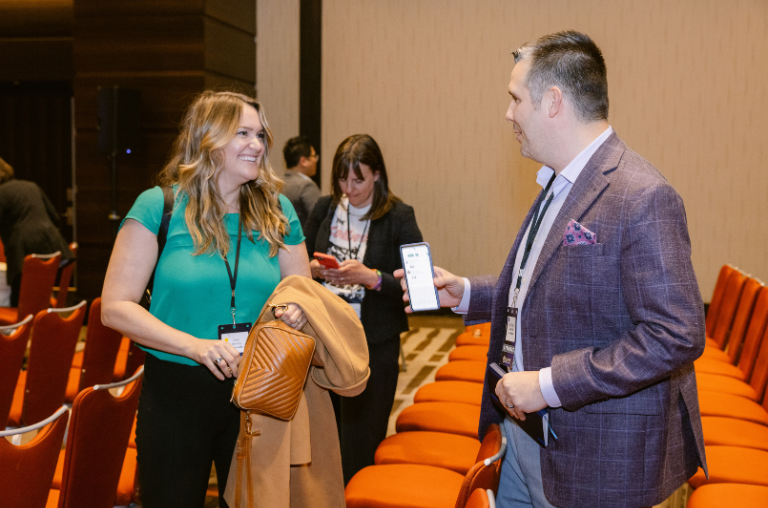
Secure Your Place & Leave with an Action Plan
Reserve your seat and walk away with practical, actionable insights you can implement immediately to accelerate your organisation’s workforce transformation.