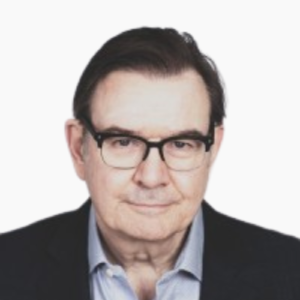
David Hole
Global Lead - Life Sciences Talent & Organisation Practice Accenture
David Hole leads Accenture’s Life Sciences Talent & Organisation Practice globally. David advises leading pharmaceutical and biotech companies on workforce transformation, organisational design, and talent strategy. David’s work focuses on helping organisations adapt to digital and AI-driven change, enabling new operating models and building capabilities required to compete in the future of life sciences.
Seminars
Across biopharma, the accountability has shifted. AI is no longer a technology priority sitting with the CIO, it’s a value creation imperative landing squarely on the CHRO.
The question every leader in this room is navigating is the same: how do we get to value, fast, without losing what makes our organizations distinctly human?
This session explores two interconnected challenges: making workforce strategy agile and future proof – rethinking how work gets done when humans and AI agents operate as an intelligent system, and preparing leaders to actively steer AI-driven change – building the trust that helps people see agents not as a threat but as a way to enrich work, reduce lower-value activity, and create space for purpose and judgment.
Central to that journey is a new vocabulary for the work itself. Not training, but continuous AI literacy embedded in daily work. Not job descriptions, but skills portfolios & AI collaboration profiles. Not productivity, but creating a cognitive premium, the irreplaceable value humans bring in deploying judgment, creativity, and complex decision-making. Not headcount management, but agentic orchestration.
In Europe, this plays out with an additional layer of complexity. Works councils serve as country-by-country regulatory guardrails to shape what is permissible, and this session gives HR leaders the grounding to navigate that.
Drawing on Accenture's research, refreshed skills data, and real client cases, this is a genuine peer exchange, where the insights from discussion in the room matter as much as the ones we bring to it.
Together we will shape what the future of work looks like for our organizations, our societies, and our people.
Across biopharma, the accountability has shifted. AI is no longer a technology priority sitting with the CIO, it’s a value creation imperative landing squarely on the CHRO.
The question every leader in this room is navigating is the same: how do we get to value, fast, without losing what makes our organizations distinctly human?
This session explores two interconnected challenges: making workforce strategy agile and future proof – rethinking how work gets done when humans and AI agents operate as an intelligent system, and preparing leaders to actively steer AI-driven change – building the trust that helps people see agents not as a threat but as a way to enrich work, reduce lower-value activity, and create space for purpose and judgment.
Central to that journey is a new vocabulary for the work itself. Not training, but continuous AI literacy embedded in daily work. Not job descriptions, but skills portfolios & AI collaboration profiles. Not productivity, but creating a cognitive premium, the irreplaceable value humans bring in deploying judgment, creativity, and complex decision-making. Not headcount management, but agentic orchestration.
In Europe, this plays out with an additional layer of complexity. Works councils serve as country-by-country regulatory guardrails to shape what is permissible, and this session gives HR leaders the grounding to navigate that.
Drawing on Accenture's research, refreshed skills data, and real client cases, this is a genuine peer exchange, where the insights from discussion in the room matter as much as the ones we bring to it.
Together we will shape what the future of work looks like for our organizations, our societies, and our people.