Generative AI is slowly becoming a workforce, leadership, skills and organisational design conversation, and that makes it a CHRO priority.
Across pharma, biotech, medtech and wider life sciences organisations, AI is already reshaping how scientific, operational and commercial work gets done. McKinsey estimates that generative AI could unlock $60 billion to $110 billion in annual economic value for pharmaceutical and medical products companies, with impact across drug discovery, marketing, administration and wider value-chain productivity. Accenture similarly argues that the real value of AI in life sciences will come not from isolated tools, but from reinvention of end-to-end workflows and processes across the value chain.
For senior people leaders in life sciences, this creates a new strategic mandate: helping the organisation move from AI experimentation to AI-enabled execution.
Why AI Workforce Transformation Is Now a CHRO Issue
Many life sciences companies have already experimented with generative AI. However, scaling those pilots into enterprise-wide value remains difficult. In McKinsey’s 2024 survey of more than 100 pharma and medtech leaders, all respondents had experimented with generative AI, but only 32% had taken steps to scale it and just 5% said they had realised it as a competitive differentiator delivering consistent, significant financial value.
That gap between experimentation and impact is not simply a technical problem. McKinsey identifies five barriers to scaling generative AI in life sciences: unclear enterprise AI strategy, lack of talent planning and upskilling, loosely defined operating model and governance, insufficient change management, and inadequate risk collaboration. These are core people, organisation and leadership challenges, which is exactly the territory where HR leaders need to play a defining role.
The Designing the AI-Enabled Life Sciences Workforce Europe positioned this challenge clearly: AI is rewiring how work gets done inside European life sciences organisations, but leaders still need clarity on which roles will change, which skills will matter, and how to redesign work across complex, multi-market environments. Dive into the full 2026 agenda.
From Roles to Skills: The New Workforce Design Challenge
Traditional job descriptions are becoming less useful as work is redistributed between human expertise, automation and AI-enabled systems. Instead of asking, “Which roles do we need?”, HR leaders increasingly need to ask:
- Which tasks should remain human-led?
- Which workflows can be augmented by AI?
- Which capabilities will become critical across functions?
- Where do we need to redeploy talent rather than hire more headcount?
- How do we build trust in AI-enabled ways of working?
We'll be focusing on redesigning departments around the optimal mix of human workers and technology systems, rethinking what work gets done by whom, building future skills-based organisations, and developing AI capability across broad employee populations.
This is especially important in Europe, since workforce transformation is shaped by varied regulatory environments, works councils, country-specific labour models and stronger expectations around social partnership. Unlike a single-market AI adoption strategy, we must design workforce transformation that can scale across borders while respecting local governance, employee voice and cultural expectations.
What Pharma HR Leaders Should Prioritise Now
For CHROs and senior HR leaders, the opportunity is not to “own AI” as a technology. It is to own the workforce conditions that allow AI to create value.
1. Build a skills-based view of the organisation
McKinsey found that only 6% of surveyed life sciences leaders had conducted a skills-based talent assessment to understand how their talent strategy needs to evolve around generative AI priorities. For HR, this is a clear opportunity to lead: map critical capabilities, identify emerging gaps and shift from static role planning to dynamic skills intelligence.
2. Redesign work before redesigning jobs
AI adoption should start with work, not org charts. Leaders need to identify which workflows are ready for augmentation, where human judgement is essential, and where productivity gains can be realised without creating risk or resistance. Accenture stresses that life sciences companies need to reinvent workflows and processes end to end, not simply deploy AI into existing ways of working.
3. Treat change management as a value driver
McKinsey notes that for every $1 spent on technology, $5 is required for change management to drive capability building, adoption, buy-in and value capture over time. For HR leaders, this reinforces the need to build AI literacy, leadership confidence and employee trust into every transformation roadmap.
4. Build governance that includes HR from the start
AI risk is not only about technology, data and compliance. It is also about fairness, transparency, workforce impact, employee experience and trust. Deloitte recommends creating minimum viable governance to manage AI and GenAI risks, investments, ethical use and progress while still encouraging innovation.
The European Life Sciences Opportunity
The companies that move fastest will not necessarily be those with the most AI pilots. They will be the organisations that can connect technology with workforce strategy, operating model design, leadership capability and scalable change.
For you, the question is no longer whether AI will change work. It is whether HR will shape that change strategically, or be forced to respond after the operating model has already shifted.
That is why this event is crucial. It's designed specifically for senior HR leaders in life sciences to explore how to redefine skills, reshape teams, rethink enterprise-wide work and make the human-first, machine-enhanced future pharma workforce a reality. Don't miss out, register your interest now for next year's event.
Sources
- McKinsey & Company, Scaling gen AI in the life sciences industry, January 10, 2025. Available at: https://www.mckinsey.com/industries/life-sciences/our-insights/scaling-gen-ai-in-the-life-sciences-industry
- Accenture, Reinventing life sciences in the age of generative AI, August 30, 2024. Available at: https://www.accenture.com/gb-en/insights/life-sciences/reinventing-life-sciences-age-generative-ai
- Deloitte, Realizing the value of artificial intelligence in life sciences: Key steps to harness the promise of GenAI in pharma. Available at: https://www.deloitte.com/us/en/Industries/life-sciences-health-care/articles/value-of-genai-in-pharma.html
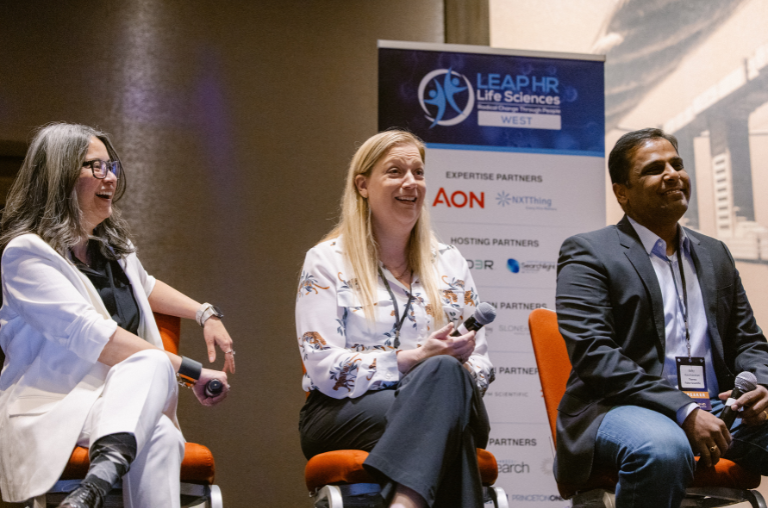
Connect with Europe’s Leading HR Innovators
Hear from senior HR leaders from across Europe who are actively shaping the AI-enabled workforce and redefining what success looks like in a new era of work.
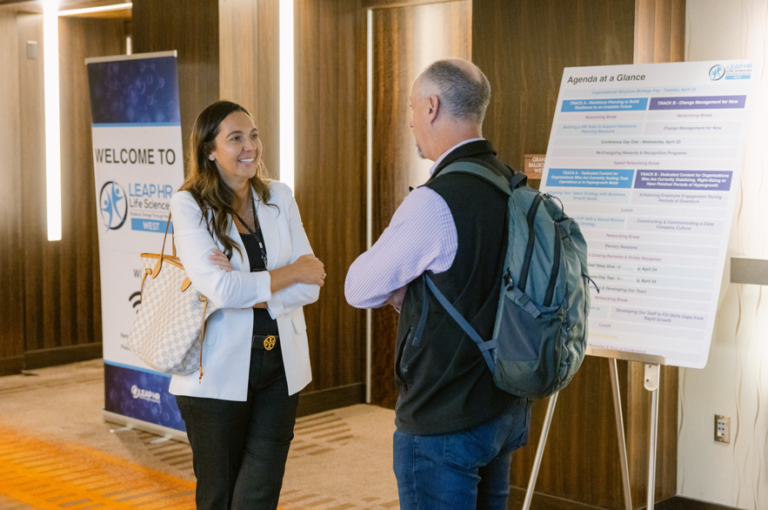
Position Your Solution at the Core of Transformation
Collaborate with forward-thinking organisations and showcase how your offering can drive meaningful change across the evolving European life sciences landscape.
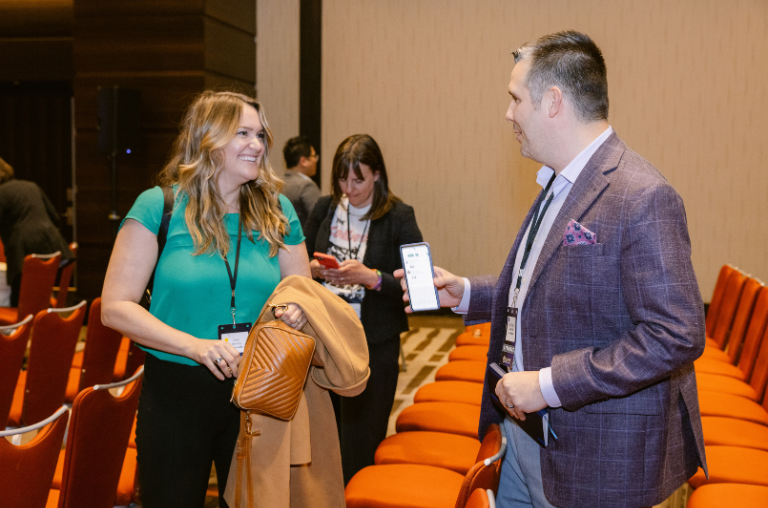
Secure Your Place & Leave with an Action Plan
Reserve your seat and walk away with practical, actionable insights you can implement immediately to accelerate your organisation’s workforce transformation.