Life sciences companies are not short of AI ambition. Across R&D, manufacturing, commercial, medical affairs, HR and enabling functions, generative AI pilots are everywhere.
The challenge is scale.
McKinsey’s research into generative AI in life sciences found that although every surveyed pharma and medtech leader had experimented with generative AI, only 32% had taken steps to scale it, and only 5% said they had turned it into a competitive differentiator that delivers consistent and significant financial value. For an industry under pressure to accelerate innovation, improve productivity and do more with constrained resources, that gap matters.
For people leaders in life sciences, it also creates a major opportunity. The scaling problem is not just about technology infrastructure. It is about workforce readiness, governance, adoption, leadership behaviour, organisational design and skills.
Why AI Pilots Stall in Life Sciences
AI pilots often start inside functions: R&D teams test scientific literature summarisation, commercial teams explore content generation, regulatory teams examine document drafting, and HR teams experiment with workforce analytics or employee support tools.
But pilots do not automatically become transformation.
McKinsey identifies common reasons life sciences companies struggle to scale generative AI, including ambiguous AI strategy, weak talent planning, unclear operating models, insufficient change management and inadequate risk alignment. Accenture also argues that the true value of AI comes from reinventing workflows and processes end to end, rather than layering AI into disconnected use cases.
This is where HR leadership becomes essential. Scaling AI requires people to work differently, leaders to manage differently, and organisations to make sharper decisions about which work should be automated, augmented or redesigned.
The Workforce Questions Behind AI Scale
For a CHRO in pharma or life sciences, the key questions are not only technical. They are organisational:
- Which roles will be most affected by AI-enabled workflows?
- Which tasks can be automated, augmented or redesigned?
- Which critical skills are missing across the enterprise?
- How do we build AI confidence among leaders and employees?
- How do we scale adoption without damaging trust?
- How do we align AI transformation with European labour expectations and governance?
The master brief for Designing the AI-Enabled Life Sciences Workforce Europe highlighted these exact challenges, including how to assess department needs, redesign work around human and technology systems, accelerate AI skills development, and avoid getting locked in a never-ending transformation spiral.
For European organisations, the complexity is even greater. The brief notes that European life sciences companies operate across varied regulatory environments, strong social partnership expectations and country-specific labour models, meaning the path to AI-enabled productivity is less uniform and more context-specific than in the US.
Why CHROs Need to Move from Adoption to Operating Model Design
A successful AI strategy cannot rely on employees simply “using the tools”. The bigger opportunity is to redesign how work flows across the organisation.
Deloitte estimates that artificial intelligence and generative AI could unlock $5 billion to $7 billion in value for life sciences organisations through strategic application across R&D, manufacturing, commercial operations and enabling functions. Deloitte also notes that R&D could account for 30% to 40% of potential AI value, while commercial operations could capture 25% to 35%.
But enterprise value depends on whether organisations can change how work is planned, performed, governed and measured. That makes HR central to the operating model conversation.
CHROs should be asking:
1. Where does AI change the shape of work?
This means mapping tasks, not just roles. In regulatory, medical, R&D, commercial and HR functions, AI may remove repetitive work, accelerate analysis, support decision-making or create entirely new capability requirements.
2. Where does AI create new skill gaps?
McKinsey notes that traditional tech talent models are often insufficient for enterprise-grade AI solutions, which may require capabilities such as AI engineering, LLM operations, model validation and business translation. HR leaders need to identify not only technical gaps, but also human capabilities such as judgement, critical thinking, change leadership and responsible AI decision-making.
3. Where does AI require governance and trust?
Deloitte recommends establishing governance that can manage AI risks, investments, ethical use and progress while encouraging innovation. In Europe, where workforce change often requires more structured employee engagement, HR must help ensure AI transformation is transparent, responsible and trusted.
4. Where does AI require leadership behaviour change?
AI-enabled transformation will fail if leaders see it only as a productivity lever. The brief positions the future pharma workforce as “human-first, machine-enhanced”, which is a useful organising principle for HR leaders seeking to balance efficiency, capability, trust and employee engagement
Turning AI Pilots into Enterprise Workforce Transformation
To move from pilot activity to workforce transformation, you should consider five practical steps:
- Create a workforce impact map for priority AI use cases.
- Build a skills taxonomy that connects current capabilities to future AI-enabled work.
- Identify critical roles and teams for early augmentation, especially where productivity or decision speed matters most.
- Develop AI adoption playbooks for leaders and managers, not just end users.
- Embed responsible AI and employee trust into governance from day one.
These are the kinds of questions that senior HR leaders will need to solve collectively as AI moves from experimentation to enterprise-wide transformation.
We brought together CHROs, Chief People Officers and HR transformation leaders to tackle the workforce, skills and operating model questions behind AI scale. Download the 2026 agenda to see how your peers are approaching the shift from AI pilots to enterprise execution.
Sources
- McKinsey & Company, Scaling gen AI in the life sciences industry, January 10, 2025. Available at: https://www.mckinsey.com/industries/life-sciences/our-insights/scaling-gen-ai-in-the-life-sciences-industry
- Deloitte, Realizing the value of artificial intelligence in life sciences: Key steps to harness the promise of GenAI in pharma. Available at: https://www.deloitte.com/us/en/Industries/life-sciences-health-care/articles/value-of-genai-in-pharma.html
- Accenture, Reinventing life sciences in the age of generative AI, August 30, 2024. Available at: https://www.accenture.com/gb-en/insights/life-sciences/reinventing-life-sciences-age-generative-ai
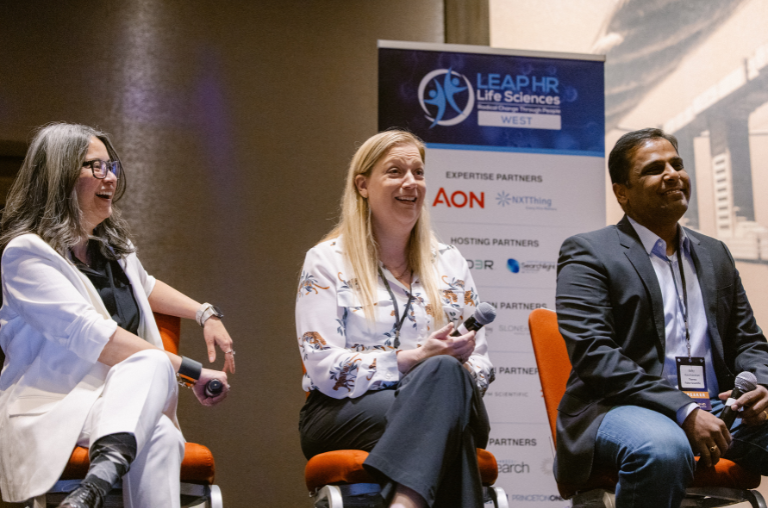
Connect with Europe’s Leading HR Innovators
Hear from senior HR leaders from across Europe who are actively shaping the AI-enabled workforce and redefining what success looks like in a new era of work.
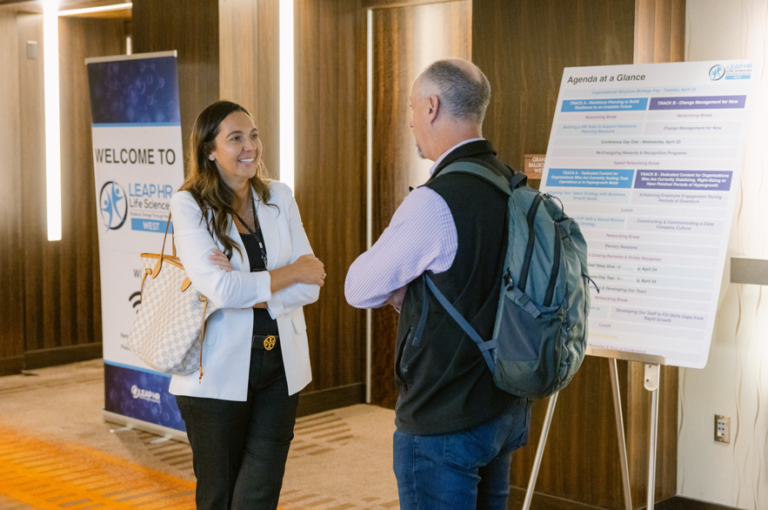
Position Your Solution at the Core of Transformation
Collaborate with forward-thinking organisations and showcase how your offering can drive meaningful change across the evolving European life sciences landscape.
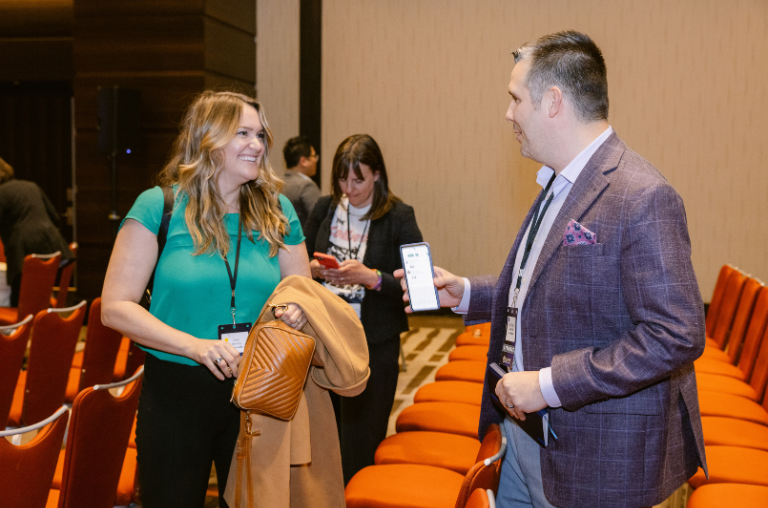
Secure Your Place & Leave with an Action Plan
Reserve your seat and walk away with practical, actionable insights you can implement immediately to accelerate your organisation’s workforce transformation.